
Corneal scarring and PTK
The cornea is the clear front window of the eye. When it is injured or infected, it can heal with a scar, which scatters light and can cause blurred or hazy vision, glare or halos.
Common causes
- Infection, such as a corneal ulcer, often linked to contact lens wear (see Red eye and contact lens safety)
- Injury or foreign body, including previous chemical or sports injuries
- Herpes simplex or shingles affecting the eye
- Previous eye surgery
- Inherited corneal dystrophies and other conditions
Assessment
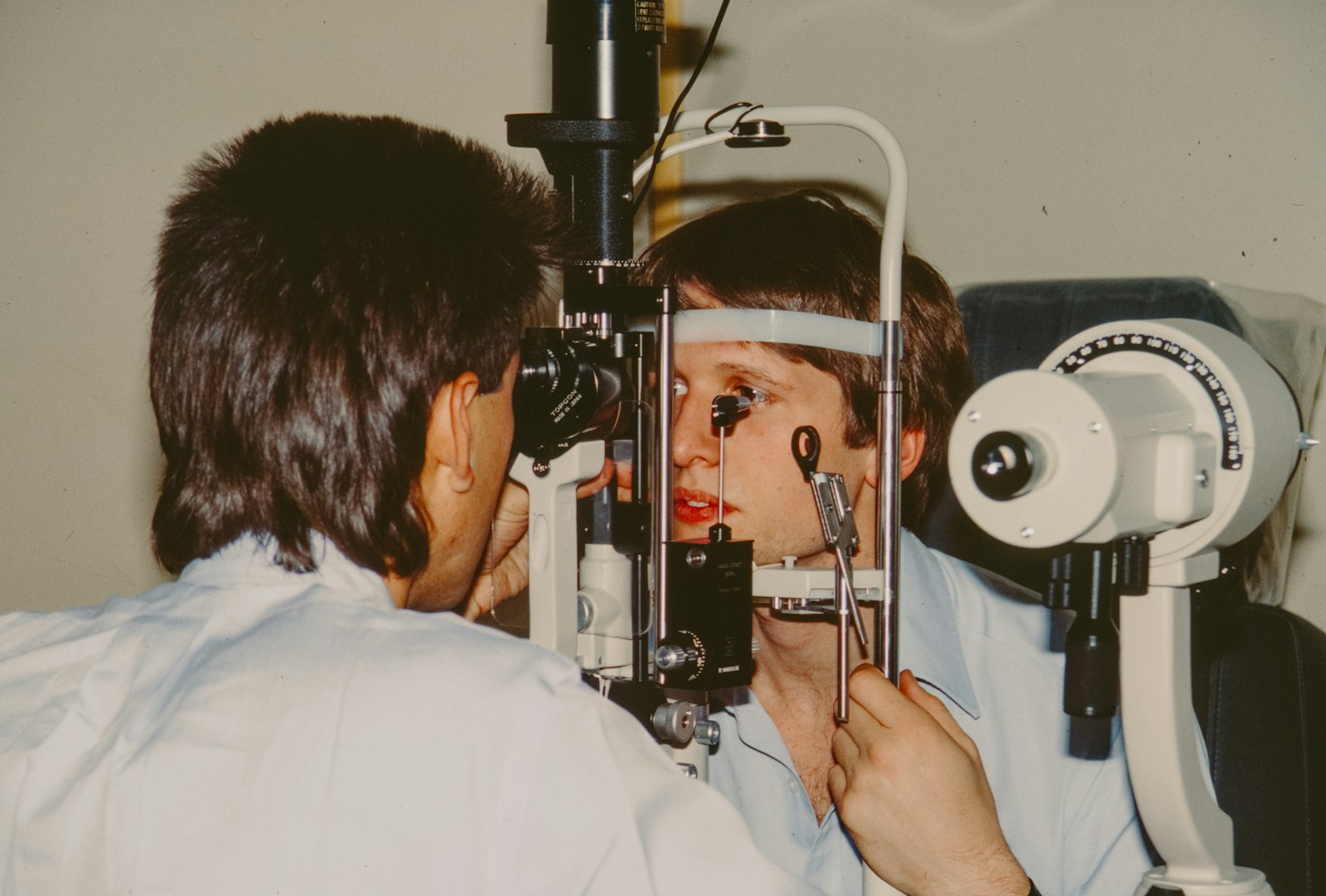
Not every scar needs treatment, and small or peripheral scars often cause no problem. Your specialist will look at how deep the scar goes, where it sits, how much it affects your vision, and whether the underlying cause is still active. Corneal scans and measurements help to plan treatment.
Options
- Glasses or specialist contact lenses. A rigid or scleral contact lens can create a smooth surface over an irregular cornea and often restores useful vision without surgery.
- Phototherapeutic keratectomy (PTK). An excimer laser removes a thin layer from the surface of the cornea. It suits scars and irregularities that sit in the front layers, and can also help recurrent erosions of the corneal surface. It may improve clarity, but it can change the cornea’s shape, which sometimes causes a shift in prescription (often towards long-sightedness), and glasses or contact lenses may still be needed afterwards. It is not suitable for deep scars.
- Lamellar or full-thickness corneal transplant. Considered when scarring is deep or other treatments have not given enough vision. See Corneal transplant techniques.
Risks of PTK
Risks include discomfort in the days after treatment, haze or scar recurrence, a change in prescription, delayed healing, infection and, in people with herpes eye disease, reactivation, which may need preventive treatment. Results vary, and more than one treatment can be needed.
What to expect
PTK is a short outpatient procedure with anaesthetic drops. A bandage contact lens is placed for several days while the surface heals. Vision recovers over weeks to months.
When to see a specialist
See a specialist if your vision has not recovered after an eye infection or injury, if you are bothered by haze or glare, or if you have been told there is a corneal scar. Any new pain, redness or reduced vision in an eye with a previous scar should be seen promptly.
This article is general information and is not a substitute for individual medical advice. All surgical and invasive procedures carry risks.