Managing Fuchs dystrophy
Fuchs endothelial corneal dystrophy (often called Fuchs dystrophy) is a slowly progressive, usually inherited condition of the cornea. The innermost layer of the cornea, the endothelium, acts as a pump that keeps the cornea clear by removing fluid. In Fuchs dystrophy these cells gradually decline in number and function, and the cornea can swell and become cloudy.
Symptoms
- Blurred or hazy vision that is worse on waking and improves during the day
- Glare and halos around lights
- In more advanced disease, vision that stays cloudy all day, and discomfort or pain if tiny blisters form on the surface
It usually appears after about age 40 or 50, affects both eyes, and is more common in women. Many people have early changes (called guttae, small bumps on the back of the cornea) for years without symptoms. Optometrists often first notice guttae during a routine examination.
How it is monitored
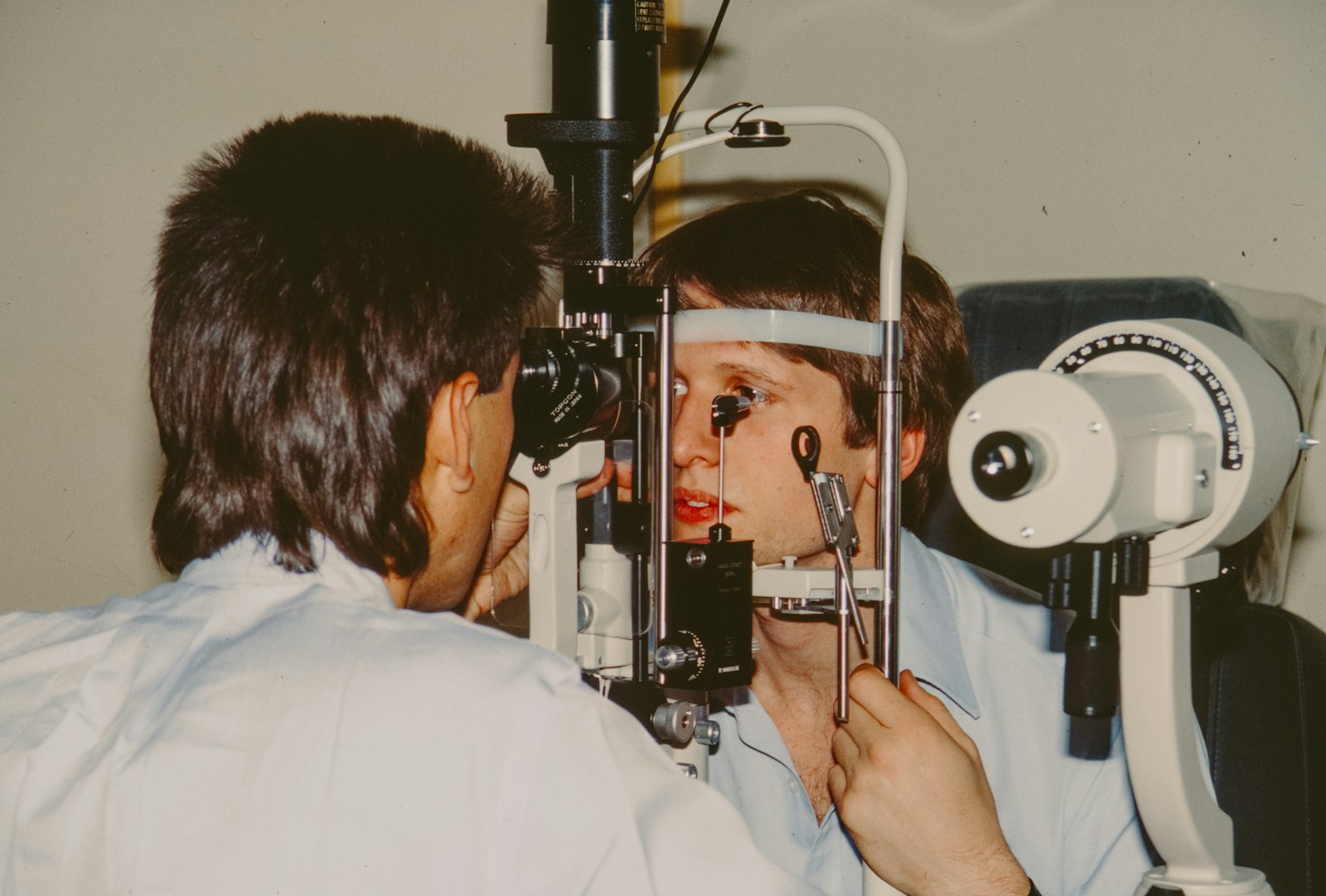
Your specialist can measure corneal thickness and examine the endothelium with specialised scans. If guttae are found but vision is good, regular monitoring is usually all that is needed.
Managing symptoms
- Lubricating drops and, where recommended, hypertonic saline (salt) drops or ointment to draw fluid from the cornea
- Using a hairdryer held at arm’s length to gently dry the surface in the morning (only if your specialist suggests it)
- Treatment of any raised eye pressure
- Bandage contact lenses for painful blisters in some cases
Surgery
When vision is significantly affected, surgery may be recommended. Rather than replacing the whole cornea, modern techniques replace only the diseased endothelial layer.
- DMEK (Descemet membrane endothelial keratoplasty) replaces the layer with a very thin donor graft. Vision recovery is often fast and rejection rates are low compared with older techniques.
- DSAEK replaces the layer with a slightly thicker graft. It is technically somewhat simpler, though the visual result may be less sharp than DMEK for some people.
- Descemet stripping only (DSO), in selected patients with a central area of disease, involves removing the diseased central layer and allowing the surrounding healthy cells to migrate in, without a donor graft. Medicines in a class called Rho kinase inhibitors are being studied for use alongside it. This approach is still developing, is not suitable for everyone, and availability and results vary.
Fuchs dystrophy and cataract
Cataract is common in people with Fuchs dystrophy, and cataract surgery can temporarily worsen corneal swelling. If you have Fuchs dystrophy, tell your cataract surgeon and make sure your corneas have been properly assessed before surgery. In some cases it may be recommended to combine surgery, or to do a corneal procedure first or after. Lens choice also needs care, because vision quality depends on the cornea.
Risks
Risks of corneal surgery include graft detachment (which can need a bubble of gas to be re-injected), rejection, infection, raised eye pressure and the need for further surgery. Regular follow-up is needed.
When to see a specialist
See a specialist if you have been told you have guttae and have symptoms, or if your vision is regularly cloudy in the morning or progressively worsening.
This article is general information and is not a substitute for individual medical advice. All surgical and invasive procedures carry risks.